Limited-Time Offer: 42% Off Steel Structures
Compare durability, cost, and snow load
Metal Building Roofs: Regular vs. A-Frame vs. Vertical
Choose the Best Style for North Carolina Weather
Choose the Best Style for North Carolina Weather
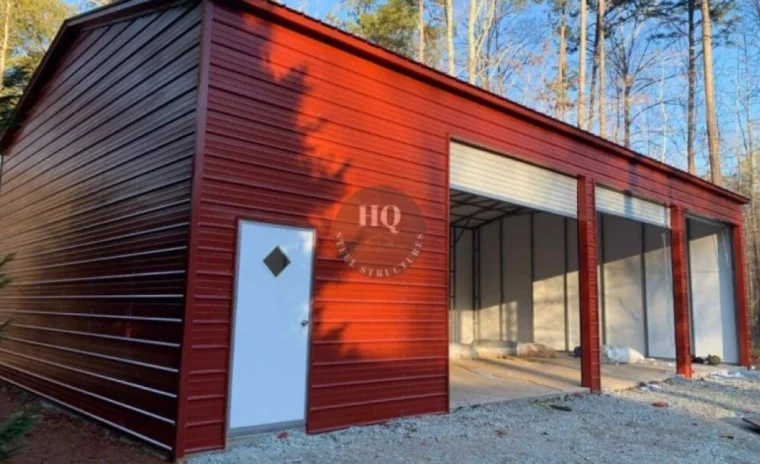
Regular roofs are the entry point for most metal building buyers, especially across North Carolina’s milder climate zones. The defining characteristic is the rounded corners where the roof meets the walls, paired with horizontal panel orientation that runs parallel to the ground.
The horizontal panels are simpler to manufacture and install, which translates directly to lower upfront costs. If you’re covering equipment in Winston-Salem or setting up a hobby workshop in Cary, and your annual snowfall stays light, a regular roof delivers solid protection without premium pricing.
Panel Orientation: Horizontal sheets run across the structure, creating visible seams that run lengthwise along the building.
Roof Shape: Rounded eaves give a softer, more economical profile. There’s no traditional peaked ridgeline.
Best Use Cases: Ideal for storage, workshops, and carports in regions where snow accumulation rarely exceeds a few inches and wind speeds stay moderate. Regular roofs handle everyday rain and sun exposure reliably when pitch and drainage are planned correctly.
A-Frame roofs, also called boxed eave designs, bridge the gap between economy and upgraded aesthetics. You get a traditional peaked roofline that looks more residential or commercial, but the panels still run horizontally from one side of the building to the other.
This style works well when appearance matters. If you’re putting up a structure visible from the road in Greensboro or Raleigh, the boxed eave gives a cleaner, more finished look than the rounded regular roof, while still keeping costs below a full vertical roof system.
Panel Orientation: Horizontal, just like the regular roof. The difference is purely in the ridgeline and eave treatment.
Roof Shape: A peaked ridge runs the length of the building, with boxed (enclosed) eaves that create crisp, angular lines at the roofline.
Structural Considerations: The A-Frame design does add a modest amount of height and a steeper pitch compared to the regular roof, which improves water runoff in areas that see frequent rain but not heavy snow loads.
Best Use Cases: Workshops, garages, and small commercial buildings where curb appeal is a priority but the climate doesn’t demand vertical panel performance. It’s a smart middle ground for customers in Burlington, High Point, and similar markets where seasonal weather is variable but rarely extreme.
Vertical roofs represent the highest tier of metal building design. Like the A-Frame, they feature a traditional peaked ridgeline, but the critical difference is panel orientation: vertical panels run from the ridge down to the eaves, creating channels that actively guide water, snow, ice, and debris straight off the roof.
This isn’t just a cosmetic upgrade. The vertical orientation fundamentally changes how the building interacts with weather. In regions with heavy snow, freezing rain, or high winds, gravity works in your favor. Snow slides off instead of sitting on horizontal seams. Leaves and pine needles don’t accumulate in panel valleys. Water evacuates faster, reducing the risk of rust or leaks over decades of use.
Panel Orientation: Vertical sheets run from the peak to the eave, with raised ribs that form continuous channels for drainage.
Structural Engineering: Vertical roofs require additional framing components like hat channels, reinforced ridge caps, and extra purlins to support the panel attachment. These hidden upgrades add strength and longevity but also contribute to the higher material and labor costs.
Best Use Cases: Any application where the building needs to last 30-plus years in challenging conditions. If you’re in the foothills near Morganton or planning a structure in an area prone to ice storms, wind-driven rain, or multi-inch snowfalls, the vertical roof is the only choice that makes long-term financial sense. It’s also the recommended style for commercial operations, agricultural buildings housing livestock or equipment, and any high-value storage where moisture control is critical.
The direction your panels run determines how effectively your building sheds precipitation and resists wind uplift. This is pure physics, not marketing.
Horizontal Panels (Regular and A-Frame): Water and debris must travel across the seams, which are oriented horizontally. On low-pitch roofs, this creates opportunities for pooling, especially where seams overlap. Leaves, pine needles, and dirt can settle into these valleys. Over time, trapped moisture accelerates oxidation and can compromise fastener integrity. In snow events, horizontal panels bear the full weight of accumulation until it melts or is manually removed.
Vertical Panels (Vertical Roof): Gravity pulls everything straight down the raised ribs. Water hits the panel and immediately begins flowing toward the eave. Snow accumulation is minimized because the steeper pitch and vertical channels encourage sliding. Debris can’t settle into horizontal pockets because there aren’t any. This is why vertical roofs are the gold standard in regions where ice, heavy rain, or sustained snow loads are a regular part of the year.
In North Carolina, the difference shows up most clearly in the foothills and mountain counties like Buncombe, Watauga, and Haywood, where winter storms can drop significant ice and snow. Closer to the Piedmont and Coastal Plain, severe weather is less frequent, but late-summer thunderstorms and tropical moisture can still test your roof’s ability to evacuate water quickly. Vertical roofs handle both scenarios with less maintenance and longer service life.
Choosing the right roof style comes down to balancing upfront investment against long-term performance and maintenance. Here’s how to map your priorities to the best option.
Choose Regular Roof If: You’re working with a tight budget and your building will be used in a mild climate zone with minimal snow and moderate wind. Regular roofs are perfect for basic storage, hobby workshops, or covered parking in areas like Wake County, Forsyth County, or the greater Raleigh-Durham region. Expect to inspect seams and fasteners periodically, and be prepared to clear heavy debris manually after storms.
Choose A-Frame (Boxed Eave) Roof If: You want a more polished appearance without the premium cost of vertical panels, and your climate falls into the moderate category. The peaked design improves water runoff compared to regular roofs, making it a smart pick for workshops, small commercial buildings, or garages where aesthetics matter. This style works well across most of North Carolina’s Piedmont and Coastal Plain regions, where snow is occasional and rain is the primary concern.
Choose Vertical Roof If: You’re building in an area with heavy snow, ice storms, high winds, or you simply want a structure that requires the least maintenance over a multi-decade lifespan. Vertical roofs cost more upfront, typically 15 to 25 percent above a comparable regular roof, but that premium buys you superior drainage, faster debris shedding, and significantly better performance in severe weather. This is the only roof style we recommend for locations in the North Carolina mountains, for agricultural buildings, for commercial operations, and for any project where long-term durability justifies the investment.
If you’re located in Winston-Salem, Greensboro, or High Point and you’re unsure which climate zone applies to your site, consider your typical winter conditions. If you see ice more than twice a season or your property has mature trees that drop heavy debris, the vertical roof will save you time and repair costs over the building’s life. If you’re closer to the coast or in areas where freezing precipitation is rare, an A-Frame or regular roof may meet your needs at a lower entry price.
At High Quality Steel Structures, we walk through this decision with every customer. Our team knows the weather patterns across North Carolina, and we’ll help you choose the roof style that makes sense for your site, your budget, and how you plan to use the building. Ready to see how each roof looks on your custom layout? Try our 3D Estimator today and compare all three styles side by side with real pricing.