Check out our 3D estimator and get a price today! Visit www.highqualitysteel.sensei3d.com for a 42% discount. Don't miss this opportunity to save big on high-quality steel structures!

Classic Car Garages: Climate Control & Security | Southeast

Metal Buildings
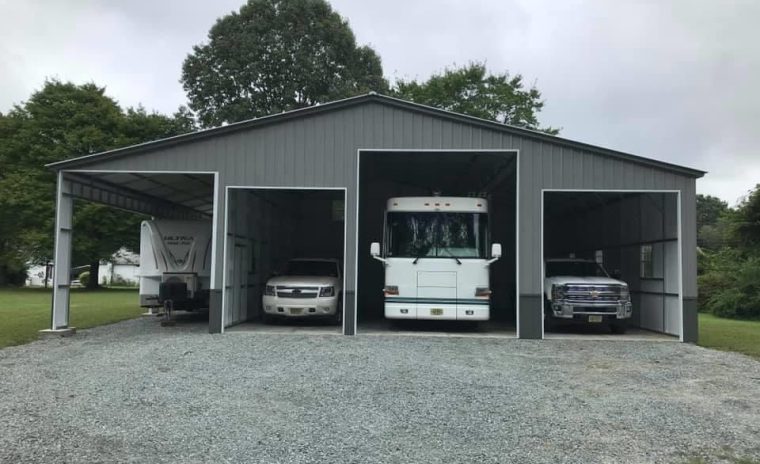
All Gray Custom Barn 6

    Classic Car Garages: Climate Control & Security | Southeast

    Climate-controlled metal garages for classic car collections require precise temperature (65-70°F), humidity control (40-50% RH), security features, and proper insulation. Costs typically range $40,000-120,000 for 2-6 car buildings depending on size and systems. Metal buildings provide superior protection against moisture, pests, and fire while allowing custom layouts, lifts, and integrated workshop space.

    Why Classic Cars Need Climate-Controlled Metal Buildings

    • Humidity control: Closed-cell spray foam insulation + dehumidification maintain 40-50% RH to prevent rust without over-drying leather and rubber.
    • Temperature stability: Constant 65-70°F prevents paint checking, clear coat hazing, and vinyl cracking.
    • Sealed environment: Prevents dust, pollen, and pollutants from affecting finishes.

    Essential Climate Control Systems

    Temperature and Humidity Management
    • HVAC sizing: Multi-zone mini-splits for 30x40 to 40x60 garages (18,000-36,000 BTU). Cost: $4,500-12,000 installed.
    • Dehumidification: Whole-building units (70-90 pint capacity). Cost: $1,200-2,800 plus installation.
    • Insulation: Closed-cell spray foam, R-25 walls, R-38 ceiling. Budget: $3.50-5.00 per sq ft.
    • Air circulation: Ceiling fans and vents prevent stagnant air pockets.

    Typical 40x50 six-car garage climate control: $15,000-25,000 including insulation, HVAC, dehumidification, and controls.

    Regional Climate Considerations
    • Coastal areas: Closed-cell insulation + robust dehumidification; corrosion-resistant HVAC.
    • Mountain regions: Enhanced ceiling insulation (R-38+), properly sized heating systems.
    • Moderate climates: Mini-splits provide efficient year-round operation.
    Security Features
    • Commercial-grade insulated steel doors with high-cycle rating ($2,200-4,500 per door)
    • Security hardware: Deadbolts, anti-pry plates, interior barriers
    • Windows: Minimal or high-mounted with security glazing
    • Lighting: Motion-activated LED exterior and timer-controlled interior ($1,500-3,500)
    • Surveillance: Conduit for 4-8 cameras, integrated monitoring
    • Alarm system rough-in included during construction
    • Total security costs: $5,000-12,000 beyond basic construction
    Custom Features
    • Automotive lifts (4-post, 9,000-12,000 lb capacity, $3,500-8,000)
    • Epoxy flooring (multi-layer, $4-8 per sq ft)
    • Dedicated workshop space (12x20 to 15x25) with 220V power & compressed air
    • Display lighting (track/recessed LED, dimmers)
    • Bathroom facilities for extended sessions
    • Climate-controlled storage rooms for parts and memorabilia
    Construction Specifications
    • 6-inch reinforced concrete slab with 6-mil vapor barrier, lift-ready
    • Closed-cell spray foam (R-21 walls, R-38 ceiling)
    • Interior finish: Painted steel panels or drywall
    • Electrical: 200-amp minimum, outlets every 6-8 ft, 220V drops
    • HVAC: Ductless mini-split heads mounted high, exterior condenser with noise/aesthetic consideration
    • Doors: Insulated steel, commercial operators, remote monitoring capable

    Optimal Building Sizes for Multi-Car Collections

    Collection Size Recommended Building Dimensions Advantages
    2-3 Cars Standard detached garage 30x40 (1,200 sq ft) Room for cars plus workbench, parts storage
    4-5 Cars Multi-car garage 40x50 (2,000 sq ft) Comfortable maneuvering space, small workshop area
    6-8 Cars Collector garage 50x60 (3,000 sq ft) Multiple rows, lift capability, dedicated workshop
    10+ Cars Museum-style facility 60x80+ (4,800+ sq ft) Display configuration, multiple lifts, lounge area

    Permit & Code Considerations

    • NC: Engineered drawings over 1,000 sq ft, mechanical permits, setbacks 5-10 ft
    • SC: Upstate = quick permits; coastal = wind-load engineering
    • GA: Metro Atlanta = detailed plans & inspections
    • TN: 2-4 weeks processing; metro = more documentation
    • VA, PA, OH: R-30+ walls, R-49+ ceilings; large accessory structures scrutinized
    • FL: Strict codes, hurricane-rated doors, wind-load calculations; 6-10 week permit

    Frequently Asked Questions

    • What's the ideal temperature and humidity for storing classic cars?

      Maintain 65-70°F temperature and 40-50% relative humidity year-round. This range prevents rust formation, preserves rubber and leather, and protects paint and chrome. Consistency matters more than exact numbers—avoid fluctuations exceeding 5-10 degrees or 10% humidity. Quality climate control systems in properly insulated metal buildings maintain these conditions reliably across all seasons.

    • How much does a climate-controlled garage for classic cars cost?

      A basic 30×40 climate-controlled garage costs $55,000-85,000 including foundation, insulation, and climate systems. Premium 40×60 collector facilities with security features, epoxy floors, and workshop space run $95,000-150,000. Size, features, and location affect costs significantly. Metal construction costs 30-40% less than comparable stick-built garages while offering superior climate control and durability.

    • Should I build a climate-controlled garage or use a storage facility?

      Building your own climate-controlled garage costs more initially ($60,000-120,000) but eliminates monthly storage fees ($150-500/car), provides immediate access, and adds property value. Storage facilities cost $1,800-6,000 annually per car—recovering building costs in 10-20 years while owning an appreciating asset. Most serious collectors with 3+ vehicles choose private garages for convenience and control.

    • What insulation is best for classic car storage buildings?

      Closed-cell spray foam insulation (R-21+ walls, R-38+ ceiling) provides optimal performance for classic car storage. It creates a complete air seal, prevents moisture infiltration, and maintains precise temperature control. While costing $3.50-5.00/sq ft versus $1.50-2.50 for fiberglass, spray foam prevents condensation that causes rust and enables smaller, more efficient HVAC systems—essential for protecting valuable collections.

    • Can metal buildings handle automotive lifts for car storage?

      Yes, metal buildings accommodate automotive lifts easily when properly engineered. Foundation requires additional reinforcement at lift anchor points (typically 12-inch footings). Clear-span metal construction provides unobstructed space for lift installation and operation. Four-post lifts work perfectly in metal garages, doubling storage capacity. Specify lift plans during design phase for proper foundation preparation.

    • Do I need special electrical for a collector car garage?

      Yes, serious collector garages require 200-amp electrical service minimum. This supports climate control systems (30-50 amps), dehumidification (15-20 amps), lifts (20-30 amps), welders or air compressors (30-40 amps), plus general lighting and outlets. Include multiple 220V circuits and abundant 110V outlets. Plan electrical during construction—retrofitting is expensive and disruptive.

    Protect Your Investment with Purpose-Built Construction

    Classic car collections deserve storage environments as exceptional as the vehicles themselves. Climate-controlled metal garages provide the precise environmental control, security, and flexibility serious collectors require—at costs substantially below traditional construction while offering superior long-term performance.

    Whether you’re storing a modest 2-3 car collection in a 30×40 building or creating a museum-quality 6,000 sq ft facility for a significant collection, metal construction delivers the durability and customization automotive investments demand.

    High Quality Steel Structures builds climate-controlled collector garages throughout North Carolina, South Carolina, Georgia, Tennessee, and across the Southeast. We understand the specific requirements of automotive storage and deliver engineered solutions that preserve value for decades.