Limited-Time Offer: 42% Off Steel Structures
- Home
- /
- The Complete Metal Building Buyers Guide
The Complete Metal Building Buyers Guide
Purchasing a metal building is one of the smartest investments you can make for your property—whether you’re looking for extra storage, a workshop, agricultural space, or a commercial facility. But with so many options available, knowing where to start can feel overwhelming.
This comprehensive metal building buyers guide will walk you through every decision you need to make, from choosing the right building style and roof type to understanding materials and planning your space. By the end, you’ll have the knowledge to confidently select a metal structure that meets your needs, fits your budget, and lasts for decades.
Before diving into the specifics of how to choose a metal building, it’s worth understanding why steel structures have become the preferred choice for millions of property owners across America.
Metal buildings offer an unmatched combination of durability, affordability, and versatility. Unlike traditional wood-frame construction, steel structures resist termites, rot, mold, and fire. They can withstand extreme weather conditions, from heavy snow loads to hurricane-force winds, while requiring minimal maintenance throughout their lifespan.
Perhaps most importantly, metal buildings are significantly faster and more
cost-effective to install than conventional construction. Most structures can be delivered and set up within days rather than weeks or months, getting you into your new space quickly.
The first major decision in your metal building journey is selecting the right style. Each type is engineered for specific applications, and choosing correctly ensures you get maximum value and functionality.
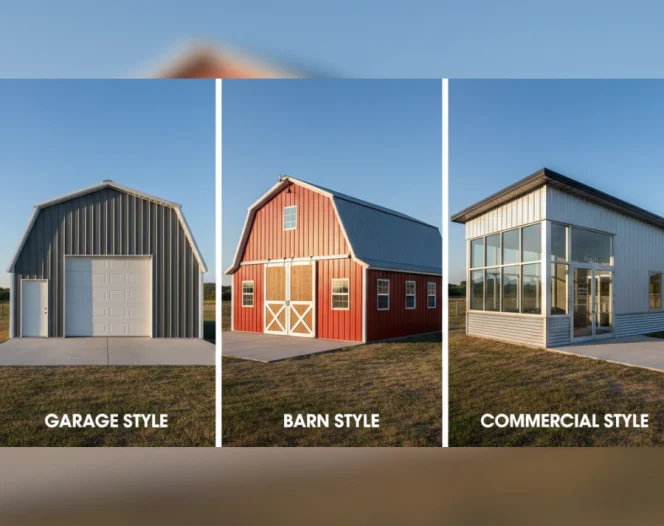
Metal garages are the most popular steel structure choice for residential properties.
They provide secure, weather-protected space for vehicles, equipment, tools, and recreational items.
Metal garages typically range from 12′ × 20′ for single-car units up to 30′ × 50′ or larger for multi-vehicle and workshop combinations. The clear-span design means no interior support posts blocking your space—giving you complete freedom to organize as needed.
Metal barns have revolutionized agricultural and equestrian facilities. Today’s steel barns combine the classic aesthetics property owners love with modern engineering that delivers superior performance and longevity.
Metal barns can be configured with center aisles, lean-tos on either or both sides, and various door placements to accommodate your specific workflow. Many property owners add living quarters or apartment spaces above or adjacent to their barn—creating efficient multi-use structures.
For business owners, contractors, and entrepreneurs, commercial metal buildings offer the most cost-effective path to professional-grade facilities. These larger structures are engineered to meet strict building codes while maximizing usable interior space.
Commercial buildings can span up to 100 feet wide or more without interior columns, creating unobstructed space that can be divided and configured exactly to your specifications. Steel’s strength-to-weight ratio allows for larger clear-span designs than any other building material.
When full enclosure isn’t necessary, metal carports provide excellent protection at a lower price point. These open-sided structures shield vehicles and equipment from sun, rain, snow, and hail while allowing easy access from all sides.
Many customers start with a carport and later add side panels and doors to create a fully enclosed garage—a flexible approach that spreads your investment over time.
Your roof style significantly impacts both the performance and long-term value of your metal building. Each option offers distinct advantages depending on your climate, budget, and intended use.

The regular roof features horizontally-oriented panels that curve gently over rounded rafters. This is the most economical roof option and works well in mild climates.
Best For: Budget-conscious buyers in dry, mild climates. Ideal for basic storage and carport applications where maximum weatherproofing isn’t critical.
The A-frame boxed eave roof offers a traditional peaked appearance with horizontal panel orientation. It’s a popular mid-range choice that balances aesthetics with affordability.
Best For: Homeowners wanting traditional appearance at moderate cost. Works well in areas with occasional rain but limited heavy snow.
The vertical roof is the premium choice, featuring panels that run vertically from ridge to eave. This design allows rain, snow, and debris to slide off naturally—making it the most weather-resistant option available.
Best For: Anyone prioritizing longevity and minimal maintenance. Essential for areas with heavy rain, snow, or severe weather. The smart long-term investment for permanent structures.
| Feature | Regular | A-Frame Boxed | Vertical |
| Panel Direction | Horizontal | Horizontal | Vertical |
| Weather Resistance | Basic | Good | Excellent |
| Snow/Rain Shedding | Limited | Moderate | Superior |
| Structural Strength | Standard | Enhanced | Maximum |
| Price Point | $ | $$ | $$$ |
| Best Climate | Mild/Dry | Moderate | All Climates |
Our Recommendation: For most buyers, we recommend the vertical roof style. While the upfront cost is slightly higher, the superior durability, reduced maintenance, and extended lifespan deliver better value over time. Think of it as an investment that pays for itself.
Understanding the materials that go into your metal building helps you make informed decisions about quality, durability, and long-term value.
While this guide focuses on metal buildings, many buyers compare steel to traditional wood-frame construction. Here’s how they stack up:
| Factor | Steel Buildings | Wood Buildings |
| Lifespan | 40+ years | 15-25 years |
| Termite Resistance | Immune | Vulnerable |
| Fire Resistance | Non-combustible | Combustible |
| Rot/Mold Resistance | Immune | Susceptible |
| Maintenance | Minimal | Regular required |
| Insurance Costs | Often lower | Standard/Higher |
| Construction Speed | Days-Weeks | Weeks-Months |
| Clear-Span Width | Up to 100’+ possible | Limited by lumber spans |
Steel consistently outperforms wood in durability, safety, and total cost of ownership. The slightly higher initial investment in a quality steel structure pays dividends through decades of reliable, low-maintenance service.
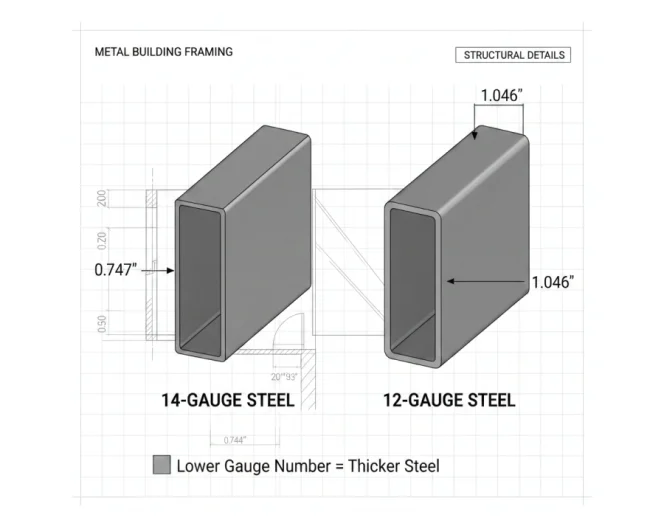
Steel gauge indicates thickness—lower numbers mean thicker, stronger steel. Most metal buildings use either 14-gauge or 12-gauge framing:
14-Gauge Steel (0.075″ thick): The industry standard for residential and light
commercial buildings. Provides excellent strength for most applications and is the most cost-effective option for typical uses.
12-Gauge Steel (0.105″ thick): 40% thicker than 14-gauge, offering maximum structural strength. Recommended for large buildings, heavy snow regions, high wind areas, and structures requiring certified engineering.
The coating on your metal panels determines both appearance and corrosion resistance. Quality coatings are essential for long-term performance.
Galvanized Steel: A zinc coating that provides basic corrosion protection. Often the base layer under painted finishes. Silver appearance if left unpainted.
Galvalume®: An aluminum-zinc alloy coating offering superior corrosion resistance compared to standard galvanizing. Excellent for coastal or humid environments.
Painted/Powder Coated: Baked-on paint finish available in numerous colors. Provides both aesthetic appeal and an additional protective layer. Most buildings are finished with painted panels.
Most manufacturers offer 15+ standard colors including white, tan, gray, brown, red, green, blue, and more. Two-tone combinations (different colors for roof and walls) are popular for achieving specific aesthetic goals or matching existing structures.
A comprehensive warranty protects your investment. Look for coverage that includes:
Always review warranty terms carefully. Note any requirements (like proper anchoring or roof style) that must be met for coverage to remain valid.
One of the most common regrets we hear from metal building owners is “I wish I’d gone bigger.” Proper space planning ensures you get a building that meets both current and future needs.
Start by listing everything you plan to store or do in your building. Then add 25-50% more space for growth, new acquisitions, and working room. Trust us—you’ll use it.
Common Size Guidelines:
| Use Case | Recommended Minimum Size |
| Single car + minimal storage | 12′ × 24′ |
| Single car + workshop space | 18′ × 26′ |
| Two cars side-by-side | 20′ × 24′ |
| Two cars + workshop | 24′ × 30′ |
| Three cars or RV | 30′ × 40′ |
| Small barn/multi-use agricultural | 30′ × 36′ |
| Large equipment/commercial storage | 40′ × 60’+ |
Don’t overlook vertical space. Standard leg heights range from 6 feet to 16+ feet. Consider:
Strategic door placement improves workflow and usability. Consider:
Roll-Up Doors: Essential for vehicle access. Available from 8′ × 8′ to 16′ × 16′ or custom sizes. Place based on how you’ll drive in and maneuver.
Walk-In Doors: 36″ standard size for pedestrian entry. Position for convenient access without opening large vehicle doors.
Multiple Entry Points: Larger buildings benefit from doors on multiple sides for efficient movement and emergency egress.
Proper ventilation prevents condensation, reduces heat buildup, and improves air quality—especially important if you’ll spend time working inside.
Understanding pricing helps you budget accurately and make smart tradeoffs. Here are the key factors that influence your final cost:
Before finalizing your purchase, walk through this checklist to ensure you’ve covered all bases:
When you’re ready to invest in a metal building, choosing the right supplier makes all the difference. At HQ Steel Structures, we’re committed to delivering exceptional value through:
Now that you understand metal building styles, roof options, materials, and space planning, you’re ready to design your perfect structure.
Get your free, no-obligation quote today. Our building specialists will walk you through options, answer your questions, and help you configure a metal building that meets your exact needs—and budget.
Lead times vary by season and region, but most buildings can be delivered and installed within 4-8 weeks of order confirmation. Smaller structures may be completed faster, while large commercial buildings may take longer. We’ll provide a specific timeline with your quote.
Permit requirements vary by location and building size. Many jurisdictions require permits for structures over a certain size or those with electrical/plumbing. We recommend checking with your local building department early in the planning process. We can provide certified engineering plans if required.
Metal buildings can be installed on various foundations including concrete slabs, gravel pads, asphalt, or even directly on level ground with proper anchoring. The best choice depends on your use, local codes, and soil conditions. Concrete is ideal for workshops and garages where you’ll spend time; gravel works well for storage and agricultural uses.
Yes! Metal buildings are highly adaptable. You can add insulation, interior walls, electrical systems, HVAC, additional doors, windows, and lean-tos. Many customers start with a basic structure and add features over time. Planning for future modifications during initial design (like extra height or pre-positioned door openings) makes upgrades easier.
When properly engineered and installed, metal buildings excel in extreme weather. Steel framing withstands high winds (our certified buildings can meet requirements up to 170 mph), and vertical roofs shed heavy snow loads effectively. We’ll help you specify the right wind and snow ratings for your location. Metal buildings are also inherently fire-resistant.
Our quotes typically include the complete building package (framing, panels, trim, fasteners), delivery within our service area, and professional installation with anchoring. Site preparation, foundation work, permits, and utilities are usually handled separately. We’ll clearly outline what’s included so there are no surprises.
Continue learning with these helpful guides: